
2·
3 years agoIt stands for Long Range, so would otherwise have been LR.

I blog about #technology #gadgets #opensource #FOSS #greentech #traditionalwetshaving #LCHF #health #alternativeto #hamradio (ZS1OSS) #southafrica - see https://gadgeteer.co.za/blog. I also blog to various other social networks which I list at https://gadgeteer.co.za/social-networks-i-post-to.
It stands for Long Range, so would otherwise have been LR.
I’m reading this on Boost (once off payment) and no ads…

Fast to open, search, sync compared to? To answer generally, though - no lags or long waiting for anything to happen.
Ah got you, it is just text though so the syncing is pretty quick and light. I’d say way less than any site hosting images and videos. The default is no sync, so users need to set that up to sync too. It attempts to do smart sync between successful syncs.
In what way though? If you’re self-hosting you just keep your server online. It does not need that central server at all to operate. Even if there are no updates it keeps running.
It can be self-hosted as well so that server is not essential to the service…
But like most other things you’d chroot in and disable it? I think though whatever fills up your disk is probably going to prevent a proper boot up.
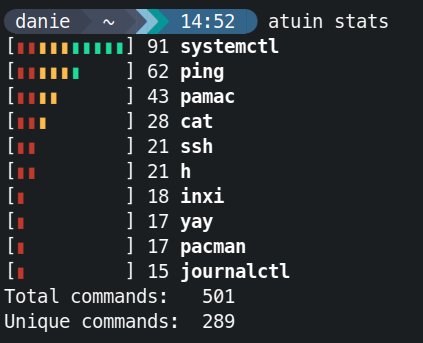
I think a lot of other OS things are going to break when a disc gets full… But you can also delete history within Atuin.
Atuin only has styles really but if you mean the bash prompt, I’m using Starship prompt.
You can though search, hit TAB, and then do edits to the line before executing. That is pretty handy if it is something complex across a few machines with a specific change.
Interesting, I see Orgzly uses Org mode formatting in plain text - https://orgmode.org/features.html
I actually use Obsidian on my Linux desktop, synced with Syncthing to my Android phone, iPad, home server, etc (have version control also active to keep older copies of notes). Mainly because the volume of notes I do is on the desktop, and I need them for reference everywhere. But I’m not sure Obsidian is best as a phone app (bit busy), but you could test it with a simple UI.





A lot of speculation that does end with this in the article:
"After discussing her case with experts, Matsapulina now believes her Telegram messages may have been compromised by a form of spyware. When she was told that a hacking device would need to be physically nearby to infiltrate her phone, a memory resurfaced: At times before her arrest, she had noticed an unmarked truck with a dome on its roof parked outside her building. She had even jokingly mentioned it to friends on Telegram. Now, she remembered, as the police were banging on her door that morning, she’d spotted the same mystery vehicle parked outside. By the time the police stormed her home, the vehicle was gone.
Matsapulina has since started using Telegram again."
Most messaging apps are vulnerable on the client side with spyware, no matter what E2EE exists along the way.